Final Call for Journal Articles

The National Fire Heritage Center has extended the submission deadline for the inaugural issue of the Fire Heritage Review to March 31, 2026. We have already received a number of thoughtful, well‑developed contributions that reflect the strength and diversity of fire service history across the country.

Several prospective writers have requested additional time to complete their submissions, and in support of our mission to document, preserve, and interpret the nation’s fire and emergency services heritage, we are extending the deadline to ensure their work can be included.

This inaugural issue represents an important step in building a lasting scholarly record, and we want to provide space for as many high‑quality contributions as possible.

We welcome articles from historians, fire service professionals, researchers, students, and others committed to advancing the study of fire protection history.

To review submission guidelines and full details for the Fire Heritage Journal, click this link.

The Journal will be published in the late summer of 2026.

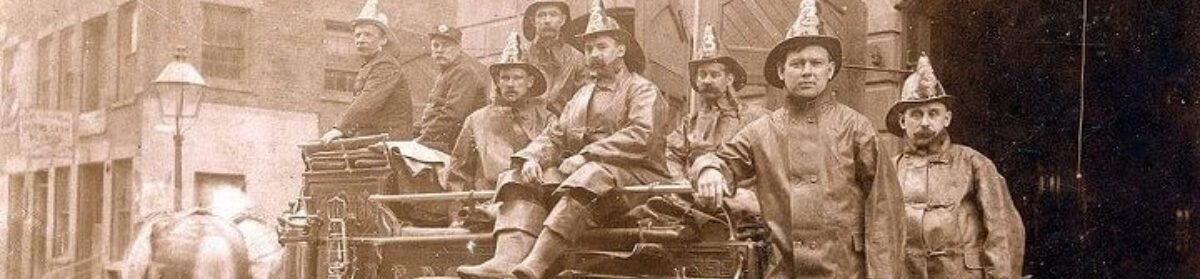
Why Should Today’s Firefighters Care About the History of the Fire Service?

By Garry Briese

Understanding the history of the fire service is not just about nostalgia; it is a critical professional tool for safety, identity, and operational evolution. While technology rapidly changes the job, history provides the “why” behind what firefighters do every day. 

1. Safety and Tactical Evolution

Modern safety standards are frequently “written in blood,” born from past tragedies that reshaped how buildings are constructed and how crews operate. 

2.  Preventing the Repeat of Past Mistakes

Historical tragedies like the Iroquois Theatre Fire (1903) and the Triangle Shirtwaist Fire (1911) directly led to today’s requirements for outward-opening exit doors, panic bars, and fire-resistant materials.

3. Professional Identity and Solidarity

History creates a sense of belonging to a “brotherhood and sisterhood” that spans centuries, helping firefighters maintain high morale and a shared sense of mission. 

4. Meaningful Traditions

Knowing why symbols like the Maltese Cross are part of the fire service or why specific tasks like “pushing a new engine into the fire station” build connections and respect for the robust history of the fire service

6. A Compass for the Future

Watch this YouTube video by Rich Laskey about the history of the fire service

Remembering Commissioner Ira Striejewski

Past Chief & Commissioner Ira Striejewski (Courtesy of Eggertsvile Hose Company)

The National Fire Heritage Center (NFHC) is saddened to hear of the passing of Ira Striejewski, 91, on January 9, 2026.

Fire Commissioner Striejewski dedicated more than seven decades to the fire service, beginning his volunteer career with the Eggertsville Hose Company in Amherst, NY, in 1952.  He went on to serve as Fire Chief from 1977 to 1980 and later as Fire Commissioner, continuing a remarkable family legacy of service.  His father also served as both Fire Commissioner and Fire Chief of the same fire department, and his grandfather was among the first paid firefighters in the City of Buffalo Fire Department. 

In 2015, Commissioner Striejewski was elected to the NFHC Hall of Legends, Legacies, and Leaders, one of the Center’s highest honors. This recognition is reserved for individuals whose contributions have significantly shaped the fire service and whose leadership and dedication have earned national respect. The fire department leader exemplified the spirit of this award through his lifelong commitment to protecting his community and advancing the fire service.

A funeral service for Chief Striejewski was held on January 16, 2026.

You may read his obituary by clicking this link.

The NFHC honors the Chief’s distinguished service and enduring contributions to the American fire service.  His lifelong commitment to duty and community will continue to inspire those who follow in his footsteps. 

Eggertsville hose company
Chief Ira Striejewske is seated in the department’s squad truck in 1952. Photo Courtesy of Eggertsville Hose Company

Nominations Open for Hall of Legends, Legacies, and Leaders Award

The National Fire Heritage Center (NFHC) has announced that it is accepting nominations for the Fire and Emergency Services Hall of Legends, Legacies, and Leaders (HLLL) class of 2027.  Nominations will be accepted through June 30, 2026.

 The HLLL award honors those who have made a lasting impact through their unwavering commitment and contributions to the fire protection and emergency services disciplines. 

Individuals and organizations may nominate deserving candidates who exemplify excellence and dedication. To learn more and submit a nomination, please click the link below to examine the submission instructions, which contain detailed information and guidance. 

Click this link to download the full details about the award and the nomination process.

Here is the link to the Hall of Legends Class of 2025.

NFHC Elects Captain Bramlett to Board of Directors

Christina Bramlett
Captain Christina Bramlett, Monroe County Emergency Services

The National Fire Heritage Center (NFHC) is pleased to announce the election of Christina Bramlett of Monticello, Georgia, to its Board of Directors. With her diverse fire service leadership experience, the Monroe County Emergency Services Fire Captain, Fire Safety Educator, and Public Information Officer strengthens the NFHC’s mission of preserving and promoting America’s fire protection legacy.

As the nation’s premier archive for fire protection history, the NFHC safeguards a vast collection of irreplaceable documents and artifacts. These perishables include art and artifacts, audio recordings, books, charts, maps, photographs, reports, and videos that chronicle the history of the fire service.

Dr. Lynn White, President of the NFHC, remarked on the appointment:Christina’s experience integrating fire history into new recruit training is a tremendous asset to help NFHC achieve its goals and mission.  Her vision about the importance of not only preserving but also sharing the history of America’s fire services and disciplines is a perfect match with ours.  We welcome her to our board.”

Bramlett brings 24 years of fire service experience to the Board, spanning volunteer and career departments across multiple states. Her career began as a volunteer firefighter in Fort Wright, Kentucky, and has included service as a firefighter/paramedic with DeKalb County Fire Rescue in Atlanta before joining Monroe County Emergency Services five years ago. In her current role at Monroe County Emergency Services, Bramlett transitioned from shift captain to full-time Public Information Officer and Fire-Life Safety Educator. 

Captain Bramlett
Captain Baramlett, Public Information Officer and Fire Safety Educator

“I am excited and honored to be a part of this organization and look forward to growing its presence and influence in our industry,” said Captain Bramlett. “The preservation of our fire service is important because men and women built the foundation that we now reside on. To learn from and honor their commitment and sacrifices is what drives those who truly understand what it took to get us where we are today.”

Bramlett’s connection to the NFHC began through Chief Glenn Dorner, whom she met while he researched the history of Monroe County Emergency Services, a department he led from 2000 to 2006. The two connected immediately over their shared passion for fire service history and tradition. When Chief Dorner stepped away from the NFHC board, he recommended Bramlett as his successor.  

“Keeping growth in the front windshield is important, but having a strong rear-view mirror of where we’ve come from is equally vital,” Bramlett added. “That perspective applies to the fire service as a whole, which is why the NFHC’s mission resonates so deeply with me.”

The NFHC has an engaged board of directors representing diverse sectors of the fire protection field nationwide. Together, they work to guide the NFHC into the future, ensuring that the history of the fire protection disciplines is preserved for generations to come.

NFHC 2025 Annual Meeting

CUMBERLAND, MD—OCTOBER 11, 2025—The National Fire Heritage Center (NFHC) held its 19th annual meeting at its new headquarters in the Allegheny Museum, marking a significant milestone for the organization. Directors gathered both virtually and in person, with participants traveling from as far as Texas to conduct the nonprofit’s business.

The NFHC was established in response to a pivotal 2003 study by the U.S. Fire Administration, which highlighted the urgent need to collect, preserve, and provide access to the historical records of the fire service and fire protection disciplines across the United States. Since its formation in 2006, the NFHC has dedicated itself to preserving and celebrating the rich history of fire protection and fire department organizations.

During the meeting, directors Lynn White, Chuck Montgomery, and Mike Dixon were reelected to the board, and Christina Bramlett was welcomed as a new director.  Officers reelected for the coming term were Lynn White, president; Billy Shelton, vice president; and Stuart Nathan, secretary. The NFHC also recognized retiring directors Mike Wieder, Glen Corner, Bob Andrews, and Iggy Kapalcyznski with gifts acknowledging their service. 

Archivist DeVore reported continued progress on cataloging and digitizing the NFHC collection with support from the Internet Archive to make materials accessible online.  The Public Relations Committee discussed ongoing work on the NFHC blog and issued a call for submissions for a new annual journal dedicated to fire protection history, with a deadline at the end of February.

President White provided an update on the organization’s five-year strategic plan, approved last year as a guiding framework. Additionally, Don Bathurst shared news on the Hall of Legends, Legacies and Leaders program and the Ben Franklin Writers Award. 

The meeting concluded with a renewed commitment to preserving and promoting the history of fire departments and the fire protection industry for generations to come.

Support the National Fire Heritage Center

If you value our mission, we invite you to make a donation to the National Fire Heritage Center. Your contribution helps preserve and share vital knowledge that informs the future of fire protection. Click below to donate and make an impact today.

Greensboro Fire Department Historians Save History One Interview at a Time


In the fire service, every call, every shift, and every story matters. But what happens when those stories fade—when the voices behind them retire, relocate, or pass away? 

In Greensboro, NC, a dedicated group of firefighters has answered this call with a sense of urgency.  They recognize that fire department history is perishable and, without deliberate action, invaluable stories risk being lost forever.

greensboro fire department

Here’s the way Retired Battalion Chief Larry Cockman put it in a February 2020 article in Firehouse Magazine: “There is definitely a void when a firefighter goes back to the firehouse after retirement and no one knows their name.” These irreplaceable stories risk fading into silence if they remain undocumented.

Stories That Matter in Greensboro

What began as a book project by the Greensboro History Book Committee evolved into something far more dynamic: a series of video interviews, capturing the voices and experiences of retired firefighters. Retired Captain Harold Haynie and active-duty firefighter Lamar Sullivan joined Cockman in this effort. As of February 2020, the team had conducted 18 interviews, comprising dozens of hours of audio-visual history, and plans were in motion for 45 more.

Fast forward to 2025: The history book committee has evolved into a nonprofit organization, the Greensboro Firefighters Historical Society.  The group of historians has now interviewed 92 retirees from the Greensboro Fire Department, representing more than 2,700 years of combined service and institutional memory.

Reflecting on the project, Cockman shared with Firehouse Magazine that one of his favorite experiences while witnessing the retirees’ reactions:  “I can see their happiness as they recount their days in the fire service.  .. We ask them about 26 questions … their memories, both good and bad, about their experiences on and off the job.  They tell us about the hardest calls they’ve been on and some of the pranks they’ve pulled on one another.”

The NFHC Applauds This Undertaking

At the National Fire Heritage Center, we echo this urgency. Whether you are part of a volunteer company or a municipal fire department with centuries of service or a newly formed department building its legacy, your history matters. It deserves to be remembered, studied, and shared.

The National Fire Heritage Center applauds Chief Cockman, Captain Haynie, and Firefighter Sullivan of the Greensboro Fire Department for recognizing the critical need to save the fire service’s rapidly vanishing history and for taking concrete steps to archive the department’s past.

Let’s follow their lead and preserve the past before the memories are gone and the stories are lost.  Don’t wait until it’s too late. 

Chief Larry Cockman, Greensboro Fire Department

Biographical Note: Larry Cockman was the chairman of the committee. He served as Driver/Engineer, Rescue Squad, Captain, Battalion Chief, and Assistant Chief. I retired with 32 years of Service as Battalion Chief. I have a BS in Fire Administration from the University of Maryland and was selected as North Carolina State Firefighter of the Year in 1987.

Editor’s Note — Be sure to check out the Greensboro Firefighters’ Historical Society page, where the committee has posted its video recordings of the interviews. Here’s the link to the archived interviews. The site also has excellent information on the Greensboro Fire Department’s history.

Currently, Larry and the committee are actively recording the department’s history, and he would be pleased to pass on advice to others working on or considering their own historical projects.
Contact Larry Cockman at:
Email: lcockman@hotmail.com
Phone: 336-509-6674
The Responsibility of a Municipal Fire Chief at Industrial Events

From the Files of David White, President of Fire & Safety Specialists (1981-2023)

Firefighters do not always need an alarm bell to know its time for work. Suddenly, all existence heaves like a sick drunk. The sound of a terrible concussion echoes across the equipment bay. Every pane of glass in the station house is simultaneously tapped by invisible fingers. Maybe that prize picture of the town’s first fire chief comes off the wall with a crash.

The boom response

I call it the boom response. Nobody waits for the first of a flood of 911 calls. Something big has happened and that fireball rising over the local industrial corridor tells you it needs immediate attention.

fire chief

So the fire trucks start pulling up to the main gates of Filibuster Fabricating and Foundry, that big plant that feeds half the town. A couple of things are immediately apparent. First, there is a big fire. Bigger than last year’s tire store fire. Bigger than last Christmas’ apartment complex fire. Bigger than anything the department has ever simulated in training exercises.

Second, there are almost certainly casualties, maybe even fatalities. Not to worry though. The pre-plan says report to the main gate and receive instructions. But the front gate is wide open. No security guard. No one in charge is to be found. What now?

Unfortunately, too many municipal or district fire chiefs act as if industrial hazards become their responsibility the day of the event, not the day they took the job. Go through the facility in advance and pre-plan it as thoroughly as any other potential fire risk. Plants, refineries, factories and mills are an integral part of the community, not untouchable fortresses.

Time after time, you read the same quote from the fire chief after some industrial catastrophe – “We had no idea what was burning.” That fire chief needs to find another job. The chief has the authority under city, state and federal regulations to know what his department is expected to deal with. Even in facilities cloaked by national security, the local fire department has the authority to demand access.

What are the hazards? What is the worst thing conceivable that could happen? What is the worst thing inconceivable that could happen? How do you respond? Do you go on the offensive or the defensive? Is choosing not to intervene at all a reasonable alternative? Every fire department has its limits. A typical six engine department does not have the resources to tackle a major fire on the top floor of a 10-story high rise. Likewise, an understanding of the resources needed to tackle an industrial fire can make the difference between half a plant or no plant. There is no shame in being defensive and letting the facility burn. It is an acceptable strategy when pitting limited resources against the worst disasters devised by man.

Click here to read the full article

Support the National Fire Heritage Center

If you value our mission, we invite you to make a donation to the National Fire Heritage Center. Your contribution helps preserve and share vital knowledge that informs the future of fire protection. Click below to donate and make an impact today.

National Fire Heritage Center Calls for Contributions to Inaugural Issue of Fire Heritage Review

CUMBERLAND, MD — The National Fire Heritage Center (NFHC) is pleased to announce an open call for contributions to the inaugural issue of Fire Heritage Review: The Journal of Fire Service and Fire Protection History, set to launch in the summer of 2026. This groundbreaking journal will serve as a platform for exploring and preserving the rich, diverse history of the fire service and fire protection field.

We are seeking original articles that cover a wide range of topics related to fire service history, including the evolution of firefighting techniques, innovations in fire safety, pivotal historical events, and key figures who shaped the field. Whether you are a fire service professional, a historian, a college student, or a passionate enthusiast, we invite you to share your unique insights.

“The fire service is a cornerstone of public safety and has a history filled with innovation, courage, and dedication,” said Dr. Lynn White, President of the National Fire Heritage Center. “By contributing to Fire Heritage Review, you will help preserve and elevate the stories that have shaped the field, ensuring that the lessons of the past continue to inspire future generations.”

This journal will fill a critical gap in the preservation of fire protection history, serving as a vital resource for both scholars and practitioners. All submissions will undergo a peer-review process conducted by experts in the field.

We invite you to contribute to this essential project and help build an important educational tool for fire service professionals, historians, and anyone with an interest in the history of fire protection.

The deadline for submissions is February 28, 2026.

For more information on the types of articles the journal seeks and how to contribute, please visit https://fireheritageusa.blog/journal/ or contact Editor Mike Dixon at fireheritagejournal@gmail.com.Welcome to the National Fire Heritage Center’s media kit, designed to promote The Fire Heritage Review: The Journal of Fire Service and Fire Protection History. This page features a collection of press releases, photographs, and infographics aimed at raising awareness about the opportunity to publish fire department and fire protection history. We invite you to utilize, republish, and share these media resources to help spread the word about our publication.

Click here to read the full press release from May 30, 2025.

Fire Heritage Review